[Originally posted in September 2019 on Fantasy/Animation]
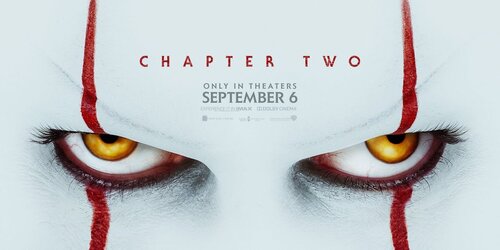
I wouldn’t say I am scared of clowns, but I definitely don’t like them. If you Google search ‘fear of clowns’ there are over ten million results, so it seems I am not alone in my dislike towards these peculiar figures. Taking its cue from something of this ongoing cultural fear around such make-upped entertainers, horror sequel IT Chapter Two (Andrés Muschietti, 2019) offers an often engaging – but always disturbing – and certainly uncanny piece of cinema about an iconic killer clown returning to terrorise his victims once more. The film picks up where we last left the Loser’s Club in the first film IT (Andrés Muschietti, 2017), with the gang – Bill (Jaeden Martell), Stanley (Wyatt Oleff), Eddie (Jack Dylan Grazer), Richie (Finn Wolfhard), Beverly (Sophia Lillis), Mike (Chosen Jacobs) and Ben (Jeremy Ray Taylor) – all making a pact to stay friends forever whilst promising to reunite should evil clown Pennywise (Bill Skarsgård) ever reappear in their hometown of Derry, Maine. The film then rapidly fast forwards to present-day Derry, a full twenty-seven years after Pennywise was last seen. Here we find the Losers’ Club have all grown up, moved on and inevitably lost touch. Our opening shot of present-day Derry is that of the local fairground – the symbol of family-friendly, let-your-hair-down, fun-for-all entertainment – that is unless you’ve ever seen a horror film. Fairgrounds are overwhelming places offering dazzling prizes to be won. However, there are always the sounds of screams from rollercoasters, or a haunted house among the twinkling and colourful lights. In its opening scenes, IT Chapter Two is very similar to eighties horror comedy Lost Boys (Joel Schumacher, 1987), matching the happiness of the fairground with a false sense of security and dread that sets the tone for what is to follow. One of the clown’s main residences, the fairground, is a trope repeated in numerous horror and fantasy films, from German expressionist classic The Cabinet of Dr. Caligari (Robert Wiene, 1920) to more recent examples of popular horror cinema, such as Us (Jordan Peele, 2019). Given the horror genre’s sustained emphasis on clown performers, and with the imminent release of Joker (Todd Phillips, 2019), and documentary Wrinkles the Clown (Michael Beach Nichols, 2019), it’s no wonder contemporary audiences may have a problem with trusting their smiling faces. Even the recent The Lego Batman Movie (Chris McKay, 2017) offers a very different and more light-hearted take on the life of the Joker feature the character’s famed smile. The clown’s painted grin offers a specifically unsettling and falsified signifier of happiness, so why would we be comfortable around something we know not to be real or artificial? Even when it’s made of Lego bricks.
 THE HNS
Leave a comment