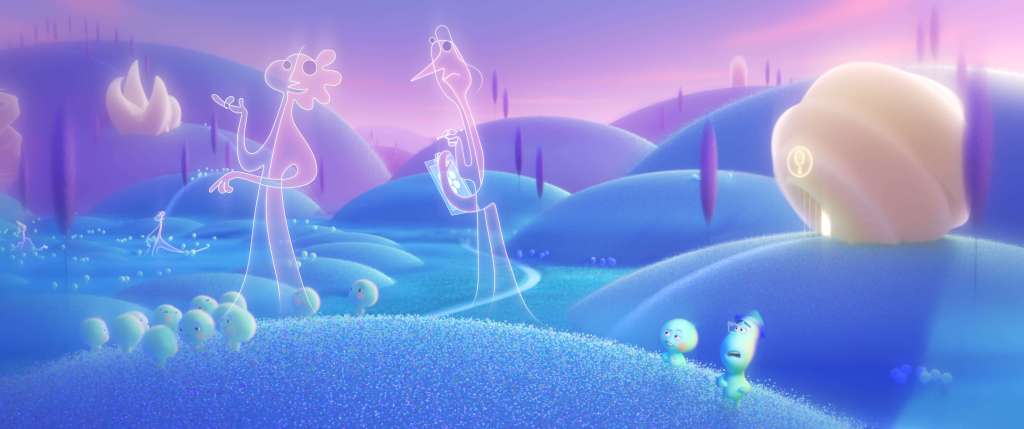
Rather than using film to illustrate philosophical ideas or applying philosophical thoughts to film, Daniel Frampton argues in his book Filmosophy that film should be thought of as being in control and conscious of its philosophical arguments. He states “Filmosophy is a study of film as thinking […] Filmosophy proposes that seeing film form as thoughtful, as the dramatic decision of the film, helps us understand the many ways film can mean and affect.” (Frampton, 2007, p. 6). Further to this, Frampton argues that “Cinema is a world of its own […] a cousin of reality […] A second world that reefs and shapes our perception and understanding of reality” (Frampton, 2007, p.1). With this way of thinking about film (or film inherently doing the thinking), Frampton explores how this new way of appreciating and exploring film can be beneficial not just to philosophy but also to spectators and filmmakers. Moving away from structured ideas of thought and philosophy, Frampton’s filmosophy opens film into the world of philosophy and allows it to have a direct influence.
Frampton concludes that with technological advances and creative filmmaking:
Cinema will then truly become its own new world – able to show anything, be anything, go anywhere, think anything – and animators will be the new gods of this world […] With the image now entirely mappable by computer, any section of a recorded image can be changed or eliminated. In the new digital image everything is manipulable, everything is re-thinkable. (Frampton, 2007, p.205).
The idea of a tangible image is therefore vital to thinking about the ways in which CGI (computer-generated imagery) or computer-animation can influence philosophers and theorists thinking about film. With an influx in computer-animated films since the 1990s, it is important to consider the influence these productions have on the spectator and their relationships to their own reality or experiences. This essay will apply this new way of thinking about computer-animation and explore philosophical ideologies through the work of animation studio Pixar. The primary focus of this piece will be on the inclusion of philosophical ideas in two of Pixar’s feature-length films – their first release Toy Story (John Lasseter, 1995) and a more recent release, Soul (Pete Doctor and Kemp Powers, 2020). By looking at films from each end of the current Pixar oeuvre, it will allow an exploration of whether Pixar’s films have become overtly philosophical as technology and financial and critical success has allowed animators to be more creative over time. Finally, this essay will return to Frampton’s new methodology of philosophy and film and deem whether this is an appropriate assessment of the impact of CGI and computer-animation in the field of philosophy.
Originally founded in 1979 as Graphics Group, Pixar (renamed in 1986) has become a household name and synonymous with exceptional animation. Pixar are creatively and technologically at the forefront of computer-animated filmmaking thanks to a focus on developing software such as RenderMan and working on the Computer Animation Production System (CAPS) alongside Disney (Pixar Animation Studies, 2019). Focussing on technological advances, as well as harbouring and nurturing creativity from its staff, Pixar has perfected what Christopher Holliday refers to as a ‘Luxo World’ (Holliday, 2019, p.67) – a direct reference to Luxo Jr. (Lasseter, 1986), the first three-dimensional computer-animated film to be nominated for an Academy Award (Pixar Animation Studios, 2019). Holliday continues to outline the Luxo world, stating “it is a fictional space that both preserves and is the preservation of the computer-animated films as […] contemporary cinema. Charged with disclosing the many particularities of these digitally animated worlds, we might therefore unfold Luxo as a synonym for […] ‘animatedness’” (Holliday, 2019, p.67). Holliday continues that “computer-animated films are not ideologically innocuous forms of commercial, family entertainment, but are rich in political allegory” outlining that computer-animated films have the potential to explore social, political and philosophical agendas without the spectator noticing (Holliday, 2019, p.18).
It is imperative to mention that Pixar’s target demographic are children. Yet, it is no secret that these films are beloved by all demographics thus making Pixar productions more powerful regarding filmosophy. Due to their popularity, Pixar films are arguably more forceful in including philosophical notions inside of their fantastical worlds. As Socrates once stated, “wonder is the feeling of a philosopher, and philosophy begins in wonder” (quoted in David and Irwin, 2000, p.xix) and this appears to be the ethos behind Pixar productions. Pixar films often base their narratives around a ‘what if?’ principal, evoking a sense of wonder whilst also inviting the spectator to respond to these ideas. That said, the questions Pixar films ask are not ones that are too grand to comprehend, nor are they simplistic in nature. They often include discussions around every day, real-life occurrences: death, loss, ageing, morality and the self. Yet, Pixar can transform real-life into whichever Luxo world they desire.
Toy Story is a perfect example of this. The world that Andy and his Mum inhabit is recognisable as suburban America. However, the focus in Toy Story is not that of the world Andy and his Mum inhabit, but that of Andy’s toys. The central component to this world is Woody (Tom Hanks), the Cowboy Sheriff doll which is Andy’s favourite toy and thus oversees the room – leading meetings to update the other toys about Andy’s life, making sure everyone has a moving buddy ahead of Andy moving to a new house (00:06:54) and inviting other toys to lead specialist sessions such as “Tuesday night’s plastic corrosion awareness meeting” (00:07:18). Within the first ten minutes of Toy Story, Woody’s authority is established alongside his concerns of becoming a lost toy. Becoming a lost toy or being deemed irrelevant is a continued theme across the Toy Story franchise. Woody is continuously fixated on fulfilling Andy’s desires, that he loses sight of what it means to be a toy despite being the one to tell Buzz Lightyear (Tim Allen) – the new toy in the bedroom – that he is not a space ranger, he is a “child’s plaything” (00:33:18).
This question of identity and purpose are frequent themes in Pixar productions and in Toy Story the underlying solution is one of acceptance, freedom and goodness. Goodness in this sense is the choice that someone can make on a moral and ethical level. This is not about being well behaved or being perceived as good, but the internal choice that is made to live a morally good life. Woody is often conflicted throughout Toy Story regarding Buzz. His innate desire is to be the only toy that Andy would ever need. His status is threatened by Buzz’s arrival and Pixar display this through a montage of Andy actively playing with Buzz, covering his walls with posters and drawings and changing his bedding to a Buzz Lightyear set. There is no dialogue in this sequence from Woody, leaving the animation and Randy Newman’s song ‘Strange Things’ to convey Woody’s despair.
Nevertheless, Toy Story provides an argument for being morally good. When Woody ‘accidentally’ pushes Buzz out of the window in Andy’s room he is reprimanded by the other toys. Woody is being selfish in these behaviours and thus ends up becoming a lost toy alongside Buzz. Woody must learn to accept Buzz and cooperate with him in order to restore Andy’s happiness. As Armond Boudreaux states:
We can learn a lot from toys, […] including what it means to be free. On the one hand, being a toy means being subject to the will and whim of one’s human owner. On the other, it means choosing between living with an identity you were given and creating a new identity for yourself […] freedom is choosing the good of another over one’s own good. (Boudreaux, 2020, p.157).
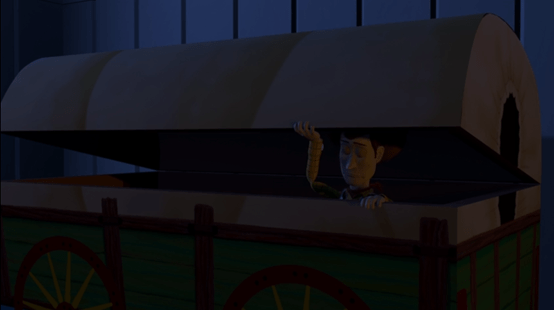
Figure 1: Woody is put away in the toy box as Buzz is chosen as the toy to sleep with Andy. (00:22:07)
A live action film may allow the spectator to visibly see the pain etched on an actor’s face as they deal with a moral dilemma. In Toy Story however, the faces seen most are those of toys. Digital animation has transcended the need for real actors on screen by replicating humanistic movements and facial expressions on inanimate objects (fig. 1). Pixar have created Luxo worlds and Luxo characters by embedding these surrealist anthropomorphic elements into a recognisable world.
The notion of realism is one that plagues the discussion of film and philosophy. However, as Frampton argues “just because cinema usually shows us a recognisable world does not mean we have to work out ‘why it isn’t a copy of reality’, but how it is a new reality, a new world.” (Frampton, 2007, p.3). Frampton’s thoughts about this align with Holliday’s notion of the Luxo world. The Luxo (and Toy Story) world can only be created through the means of computer-animation and therefore it is clear that this world is not real. Yet, to apply Frampton here, it does not matter whether this world is real or not as it is already a new world. As Frampton notes from the work of Stanley Cavell “part of the reason we enjoy cinema so much is simply because we have a natural wish to see the world recreated and retold in its own image” (Frampton, 2007, p.3) and therefore, regardless of how unrealistic a Luxo world may seem, it is always still recognisable to the spectator. A Luxo world is exactly what Frampton describes as being:
not of the world. […] Film is not simply a reproduction of reality, it is its own world with its own intentions and creativities. Cinema is the projection, screening, showing, of thoughts of the real. […] Film might now be understood as creating its own world, free to bring us to any scene or object it wishes. Film becomes less a reproduction of reality than a new reality, that merely sometimes looks like our reality (Frampton, 2007, p.5).
Further to this, Jean-Louis Baudry says of realism that “One must therefore start to analyze the impression of reality by differentiating between perception and representation. The cinematographic apparatus is unique in that it offers the subject perceptions “of a reality” whose status seems similar to that of representations experienced as perception.” (Baudry, 1992, p.704). This is crucial in Toy Story – it is not Andy’s perception that Pixar show, it is that of the toys. Thus, although the ‘real’ world is represented, it is through the experience of a toy which pushes the boundaries between what can and cannot happen or be perceived in the ‘real’ world. The repercussions of Woody pushing Buzz out of a window would be far greater than is depicted in Toy Story. Although consequences in the real world would be considered more severe (and could result in bodily harm or death to Buzz), in toy world, Woody’s punishment is still perceived as harsh.
Realism, reality and real life are all complicated terms to apply to computer-animated cinema, as with other modes of filmmaking. However, the notion of realism inside of a Luxo world does become askew when it is of no secret that these entire worlds and the characters have all been generated by a computer. Still, it is through these realistic elements that Pixar have been able to bend the rules of filmmaking and further explore philosophical ideas that are present in the real world. As Colin MacCabe expertly states in his Screen article:
Realism is no longer a question of an exterior reality nor of the relation of reader to text, but one of the ways in which these two interact. The filmmaker must draw the viewer’s attention to his or her relation to the screen in order to make him or her “realize” the social relations that are being portrayed. (MacCabe, 1992, p.92).
Thus, in the more recent Pixar release Soul, it is of no surprise that Pixar have taken this ethos further and not just recreated the ‘real’ world, but also those worlds before and after.
In his review of Soul for Empire, Alex Godfrey claims that “Soul might be Pixar’s most exquisitely lit film […] with textures to die for. This New York is just a notch away from reality, and so authentically, lovingly executed, you can feel it.” (Godfrey, 2020). Soul is different to Toy Story in its creation of the Luxo world it occupies. Soul’s rendering of New York City is so impeccably realistic that it could be mistaken for a live-action sequence (fig.2). However, one of the most interesting elements to Soul’s Luxo worlds are those of ‘The Great Before’ and ‘The Great Beyond’. In Soul, Pixar have actively taken philosophical concepts and applied them to their narrative and animation.
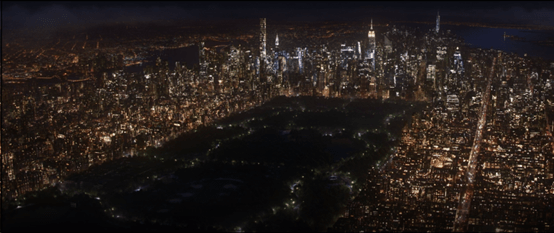
Figure 2: New York City at night in Soul (01:20:13)
Soul centres around Joe Gardner (Jamie Foxx), an unsuccessful Jazz musician, temping as a band teacher in a middle school. Although offered a full-time position at the school, Joe takes a risk and auditions for Dorothea Williams (Angela Bassett). Before auditioning, Joe exclaims to Curley (Questlove) that he “would die a happy man” if he played with Dorothea (00:04:52). When Joe leaves the audition, ecstatic that he has just landed his dream job, he escapes death numerous times. In a scene that is reminiscent of a Charlie Chaplin film, Joe avoids falling bricks, slipping on banana peels, stepping on thumbtacks and being hit by traffic – only to then fall straight into an open manhole (00:09:19). In a twisted representation of a cosmic joke, Joe dies less than five minutes after he states he could die a happy man. Rather than avoiding explicit conversations about the self and death (as may have been the case in Toy Story), Soul explores these head on by presenting the spectator with a representation of what happens before birth and after death – The Great Beyond and The Great Before.
What is noticeable about The Great Before is the texture of the landscape. As Pixar production designer Steve Pilcher describes it “almost everything has a degree of blur on it. Everything is very soft and ethereal and somewhat transparent. It is predominantly a very pastel palette, somewhat desaturated. There’s something that looks like grass, but it’s not really grass. It’s soft and almost featherlike—translucent in the way it moves” (quoted in Anderton, 2020). Harking back to Frampton and Baudry, this is a representation of a perceived idea of what happens to a soul before it takes a physical form. Everything is familiar but not really. This idea of familiarity continues to be distorted when Joe meets his mentee 22 (Tina Fey). Challenged to find 22’s spark to complete her Earth pass they try out ‘real-life’ things in ‘The Hall of Everything’. However, everything appears flat and void of colour unless interacted with confirming that these projections are not the real thing. Joe misinterprets spark to mean purpose – what a person is destined to do. As Boudreaux argues
Limitations are part of what makes us human. … Many of us bristle at the idea that we’re born with an identity, a role to play in life … It seems like a tremendous limitation on our freedom to say that who we are is chosen for us from the beginning. (Boudreaux, 2020, p.161).
What Soul is most preoccupied with is exploring the philosophical concepts of the self and death – what makes a life valuable and as 22 asks out loud “Is all this living really worth dying for?” (00:53:41). This type of overt philosophical dialogue would not be found in earlier Pixar productions. The essential takeaway from Soul is that a soul does not have a singular purpose and that there is an appreciation in the everyday.
This is reminiscent of Stanley Cavell’s notion of dailiness when discussing the comedies of re-marriage (Cavell, 1996, p.176). By always seeking something out, it is possible to ignore the contentment that comes with dailiness. This is personified in the appearance of lost souls. Lost souls are those who have become so obsessed with what brings them joy, they have disassociated from reality and are stuck in a perpetual loop. Although this can be an analogy for addiction, Soul is also trying to show that as humans, joy can easily lead to obsession and result in the loss of appreciating dailiness. Chris Falzon discusses this in terms of being moral stating that:
Being moral amounts to fully realizing ourselves, attaining the inner balance, the inner freedom of self-mastery, […] By contrast, the immoral life is one in which the self is deformed, dominated by the desiring part alone. Far from being able to pursue their interests, the immoral person is enslaved to their desires. The pressure of our desires also distorts relations with others. (Falzon, 1992, p.596)
What Soul manages to do by animating souls is personify the philosophical idea of the self and allow for the spectator to actively question what makes up a soul or even what a soul would or should look like. As Ethan Anderton notes “Souls don’t have many restrictions when it comes to their movement and expression” (Anderton, 2020) (fig. 3). Furthermore, Ellen Miller suggests that:
As we live through our ordinary experiences, the world makes its way through us and leaves its marks on us […] Our bodily knowledge, our grasp of the world is primary to who we are becoming. The world shows up as we become more skilled at dealing with the situations which present themselves to us. (Miller, 2020, p.143)
and this is the conclusion of Soul. 22 can complete her Earth patch only through experiencing and as Joe says, “That last box fills in when you’re ready to come and live” (01:26:19). It is not about finding a spark or a purpose but learning to live and having an appreciation for the dailiness of life.
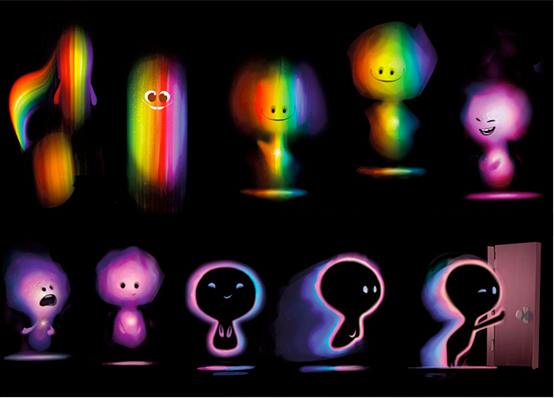
Figure 3: Visual concepts for what a soul might look like during development on Soul (Source: /Film, Anderson, 2020)
As Frampton notes in his conclusion,
the filmosopher is the person of tomorrow … The filmosopher engages in a thinking of and for the future … In filmosophy film is the beginning and the future of our thought. We thought that we needed to calculate our beliefs about the world, but the end of philosophy, with its metaphorical pictures of that belief, might lead us to realise that we can understand the world in like manner (Frampton, 2007, p. 212)
This is exactly what Pixar succeeds in through their computer-animated films. The technological advancements made by Pixar from 1995 to 2020 cannot be ignored. The animation style of Soul is impressive and a testament to the relentless progression that Pixar have made in their Luxo worlds. With these new possibilities for realistic representations of abstract thoughts, philosophy and film are closer in motivation than ever before. Pixar have moved away from more covert discussions of philosophical ideas, as in Toy Story, to focusing an entire film around them in Soul. It is only through creativity and new technology that a film such as Soul can have such a philosophical impact. Soul is not asking to be read as philosophical but is demonstrating a new kind of filmosophy – being completely in control of its thoughts and contributions to the world of philosophy.
Bibliography
Anderton, E. (2020). The Making of Pixar’s “Soul”: from the Real World to the Great before and beyond. [online] /Film. Available at: https://www.slashfilm.com/the-making-of-pixars-soul-from-the-real-world-to-the-great-before-and-beyond/ [Accessed 18 Apr. 2021].
Baudry, J.-L. (1992). The Apparatus: Metapsychological Approaches to the Impression of Reality in Cinema. In: G. Mast, M. Cohen and L. Braudy, eds., Film Theory and Criticism. New York: Oxford University Press Inc., pp.690–707. First Published – Communications, Number 23 (1975). Translated by Jean Andrews and Bernard Augst for Camera Obscura, Number 1 (Fall 1976).
Boudreaux, A. (2020). True Freedom in Toy Story, or You Are a Child’s Plaything! In: R.B. Davis and W. Irwin, eds., Disney and Philosophy : Truth, Trust, and a Little Bit of Pixie Dust. Hoboken, Nj: Wiley-Blackwell, pp.157–165.
Cavell, S. (1996). The Same and Different: The Awful Truth. In: The Cavell Reader. Cambridge, Mass.: Blackwell, pp.167–196. Originally published in Pursuits of Happiness: The Hollywood Comedy of Remarriage, Stanley Cavell (Cambridge, MA:Harvard University Press, 1981).
Davis, R.B. and Irwin, W. (2020). Introduction. In: R.B. Davis and W. Irwin, eds., Disney and Philosophy : Truth, Trust, and a Little Bit of Pixie Dust. Hoboken, Nj: Wiley-Blackwell, pp.xix–xx.
Falzon, C. (2009). Why Be Moral? In: P. Livingston and C. Plantinga, eds., The Routledge Companion to Philosophy and Film. London ; New York: Routledge, Taylor & Francis Group, pp.591–600.
Frampton, D. (2007). Filmosophy. London ; New York: Wallflower.
Godfrey, A. (2020). Soul. [online] Empire. Available at: https://www.empireonline.com/movies/reviews/soul-review [Accessed 22 Apr. 2021].
Holliday, C. (2019). The Computer-Animated Film : Industry, Style and Genre. Edinburgh: Edinburgh University Press.
MacCabe, C. (1992). Theory and Film: Principles of Realism and Pleasure. In: G. Mast, M. Cohen and L. Braudy, eds., Film Theory and Criticism. New York: Oxford University Press Inc., pp.79–92. First published Screen, Volume 17, Number 1 (Autumn, 1976).
Pixar Animation Studios (2019). Pixar Animation Studios. [online] Pixar Animation Studios. Available at: https://www.pixar.com/our-story-pixar [Accessed 2 Apr. 2021].
Filmography
Luxo Jr. (1986). [Streaming] USA: Buena Vista Pictures. Available to stream via Disney+.
Soul. (2020). [Streaming] USA: Walt Disney Studios Motion Pictures/Disney+.
Toy Story. (1995). [Film] USA: Buena Vista Pictures.
Music
Newman, R. (1995). Strange Things. Walt Disney Records. Available at: https://open.spotify.com/track/5JypFayfT1V5OG4xJ8q7jK?si=DhbyzTY3TdiZD7xT1IF_nA [Accessed 25 Apr. 2021].
 THE HNS
Leave a comment