In their follow up to A Date for Mad Mary (2016), Darren and Colin Thornton take on a remake/reimagining of the Italian 2008 film Mid-August Lunch. They transform it into a sweet and funny film about Irish Mammies and their queer sons. It revolves around a struggling novelist Edward (James McArdle) who is currently caring for his Mum, Alma (Fionnula Flanagan), who is recovering from having a stroke. With his debut novel having a viral resurgence online, Edward needs to decide how to advance forward in his career and whether to go to America for a book tour or continue to care for his Mum. There’s just one problem, his two mates and therapist all decide to bugger off on an impromptu Pride holiday, leaving their mothers with him for the weekend.
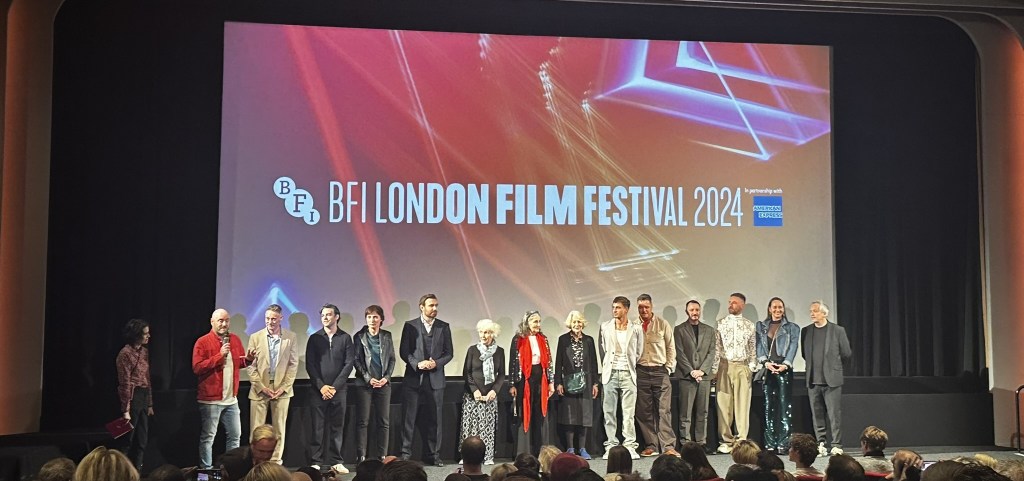
Sure, Edward could just tell Alma about the book tour and take control of his life – but what Thornton so cleverly portrays in Four Mothers is generational guilt. The feeling that you have to do something and completely pause your own life in order to better your families. Telling Alma about the tour isn’t straightforward for Edward. In theory, yes, but the act of putting his Mum in assisted living (even if it is just temporary) is not something he can happily do at this point. He feels a duty of care to her and this same duty seems to be shared by his friends and therapist. They are also for their mother’s in one way or another. What is truly remarkable about this film is the four sons represent an aging queer community. They are trying to find themselves and their identities as mid-late thirties (or later in the case of Dermot (Rory O’Neill aka Panti Bliss)) as gay men. There are no straight men as characters and this was a specific choice, said Thornton during the Q&A at the BFI London Film Festival. He said they chose to have all gay men because simply they thought it would be funnier (the film is based on the brothers’ experience with their own mother after she had a stroke) but I do think it goes a little deeper than that. Here are four queer men having to love and care for their mothers who potentially were not so loving or accepting of their sexuality.
Once the four mothers (see what I did there?) move into Edward and Alma’s house, chaos hits. One of the most remarkable things about this film is the women themselves. They are complex and whole characters and honestly I wish we had more time with them on screen – each of them being able to truly dive into how they became the women they are today. Each of them are resilient, eccentric, and wildly different from each other. They have their own demands, expectations, way of living, likes, and dislikes. Now I’m not just describing every human being for the fun of it, there is something wildly funny and satisfying watching these four very different women become a part of each other’s lives whether they want to or not. It is also wonderful to see older women come together in this way, although they are different they do have things in common. They are aging, their husbands have passed (if they had one), they are becoming more isolated and dependent on others. By being forced to co-exist for a weekend, they find community and solace. Other people who are on their level.
Needless to say that all the performances from these four actors are astounding but Flanagan really does steal the show because she is completely mute throughout. Alma’s stroke has left her without speech and so she has to communicate through a tablet. In the same Q&A, Flanagan said it was a challenge to be stripped of one of her instruments as an actor (her voice) and that she had to explore how she could convey emotion clearly enough to make an impact on screen. Although she technically has lines through the medium of the tablet, it isn’t the same as being able to vocalise an emotional moment. The fact that she does this so effortlessly is a testament to her craft. Who knew a simple look could be so funny?
Four Mothers is guaranteed to make you laugh and maybe even cry. It deals with aging, illness, loss, love, and friendship with purpose – showing how all of these things are often intertwined in our lives and that sometimes it is extremely overwhelming. It explores how to live one’s life when you’re stuck in having to live it. Edward is just existing because he has to not because he desires to particularly and he has to figure out how to learn to live it again and re-find that passion for life. It also shows a range of queer stories – not everyone comes out when they are young and discovering who they are, some come out later when their life is already established – and there is no right or wrong age to go to your first pride festival and don a harness if that’s what you want to do. You can find meaningful relationships with new people even if you think you’re past that point as long as you open yourself up to it. It explores love in all facets and will absolutely have you reaching for your phone to call your Mum by the end.
 THE HNS
Leave a comment